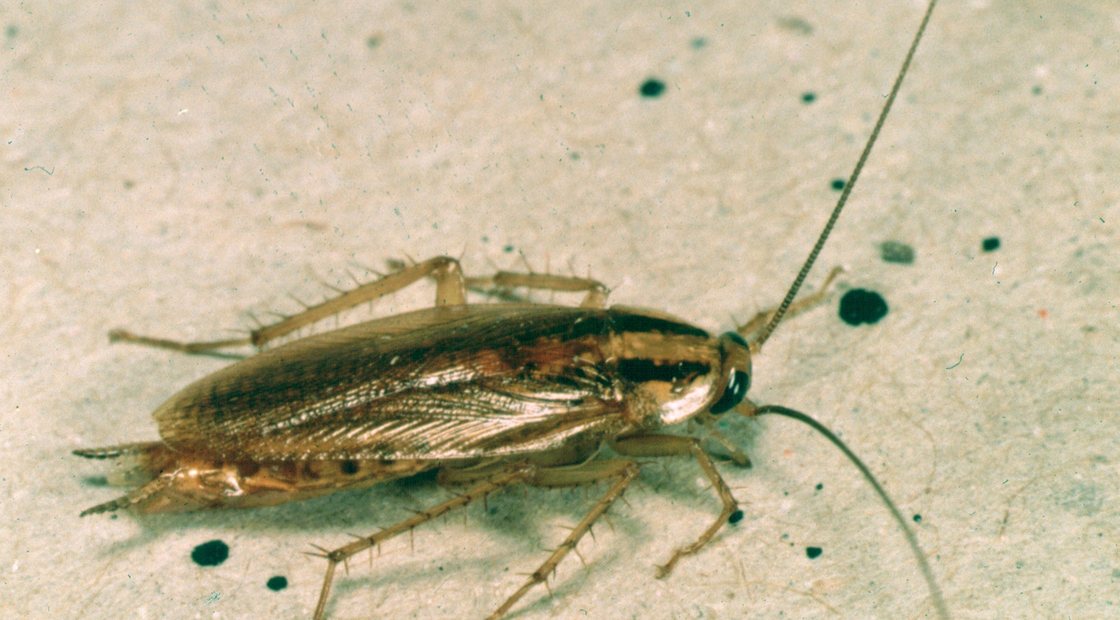
Cockroach control in East Orange, NJ is largely a German cockroach problem, and multi-family housing is why. The German cockroach lives entirely indoors, breeds year-round regardless of the weather, and packs by day into the warm, humid cracks of kitchens and bathrooms, behind and inside appliances, under sinks, and in the gap where a countertop meets the wall. In a two- or three-family home or a prewar apartment building it does not stay in one unit. It travels wall voids, shared plumbing chases, electrical conduit, and the gaps around risers, so a problem in one kitchen becomes a problem in three. Roaches contaminate surfaces and are a well-documented asthma and allergy trigger, which matters in a city with a lot of children in dense housing. An experienced local exterminator runs a bait-led program that reaches the harborage.
How you know it's German cockroaches
Small, tan, about half an inch, with two dark stripes behind the head. They run for cover when a light comes on. You find them behind the refrigerator, inside appliance motor housings, under the sink, in cabinet corners, and in bathroom voids. Egg cases, shed skins, dark specks, and a musty odor come with a larger population.
Seeing them in daylight means the population is already large enough that the hiding places are crowded. They also arrive rather than appear: in grocery bags, cardboard, secondhand appliances, and along the shared walls of the building.
Why the store-bought spray backfires
Repellent aerosols kill the roaches you can see and drive the rest deeper into wall voids, cabinets, and neighboring units. In a three-family house that means the upstairs tenant gets them next, and then they come back. Foggers and bombs are worse: they scatter a population across an entire building in an afternoon.
Roaches also develop bait aversion when the wrong products are used repeatedly, so the sequence and the placement matter more than the strength of anything on the shelf.
What actually works
Bait-led treatment: professional gel bait placed precisely where roaches harbor and travel, so they feed and pass it through the population, along with an insect growth regulator that stops the next generation from maturing. Then the gaps get sealed around plumbing, cabinets, appliance chases, and the risers that connect the floors, and monitors go down to confirm the population is dropping.
In a multi-unit building, treating one apartment alone rarely holds. Adjacent and stacked units share the voids. Coordinated treatment across the building, plus sanitation and moisture correction in each unit, is what ends it. Fix drips, cut clutter and cardboard, clean grease from appliance sides, and store food sealed.
Call and connect with an experienced local exterminator.