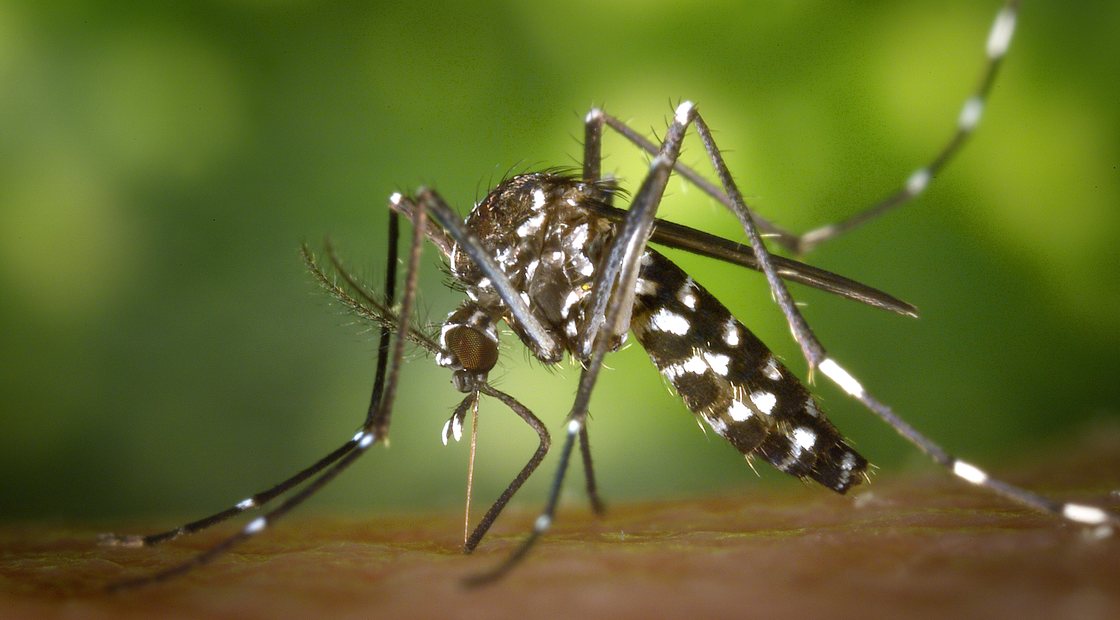
Mosquito control in East Orange, NJ is a container problem, not a wetland problem. The dominant biter here is the Asian tiger mosquito, a striped, aggressive daytime feeder that established across New Jersey decades ago and thrives in exactly this kind of dense urban landscape. It does not need a marsh. It needs a bottle cap of standing water, and a tight city backyard supplies dozens: clogged gutters, a discarded tire, a bucket, a tarp fold, a planter saucer, a birdbath, a recycling bin, a corrugated downspout extension, the low spot behind the garage, an unused kiddie pool. It rarely flies more than a couple hundred feet, which means the mosquitoes biting you were almost certainly born on your property or your neighbor's. Culex mosquitoes, which carry West Nile virus and are a standing New Jersey concern, breed in stagnant, organically rich water like catch basins and neglected pools. An experienced local exterminator cuts the breeding sites and treats where adults rest.
Why the tiger mosquito is different
It bites during the day, not just at dusk, which is why sitting on the porch in the afternoon is miserable. It is a weak flier with a very small home range, so the source is close. And it lays eggs on the damp walls just above the waterline of a container, where the eggs survive drying out and hatch the next time it rains. That is why dumping a bucket once does not solve it, and why scrubbing the container matters.
A week is all it takes for eggs to become biting adults. In a block of small yards, one neglected container can supply the whole street.
Where they come from and where they rest
Breeding: gutters, tires, buckets, tarps, planter saucers, birdbaths, bins, downspout extensions, low spots, and anything that holds water for a week. Catch basins and neglected pools for Culex.
Resting: adults spend the day in cool, shaded, humid cover, under decks and porches, in dense shrubs and ivy, along fence lines, in tall grass, and in the shaded gap between attached buildings. That is where a barrier treatment goes.
How treatment works
A property walk locates and eliminates the breeding water, with larvicide where water cannot be drained, like a rain barrel, a catch basin, or a persistent low spot. A residual barrier then goes on the shaded resting areas: the undersides of leaves, dense shrubs, fence lines, and under decks and porches.
Because adults keep arriving from neighboring yards, this works best on a recurring schedule through the season, with the barrier refreshed as it weathers and the breeding sites re-checked each visit. In a dense block, talking to the neighbors about their containers does more than any single treatment.
Call and connect with an experienced local exterminator.