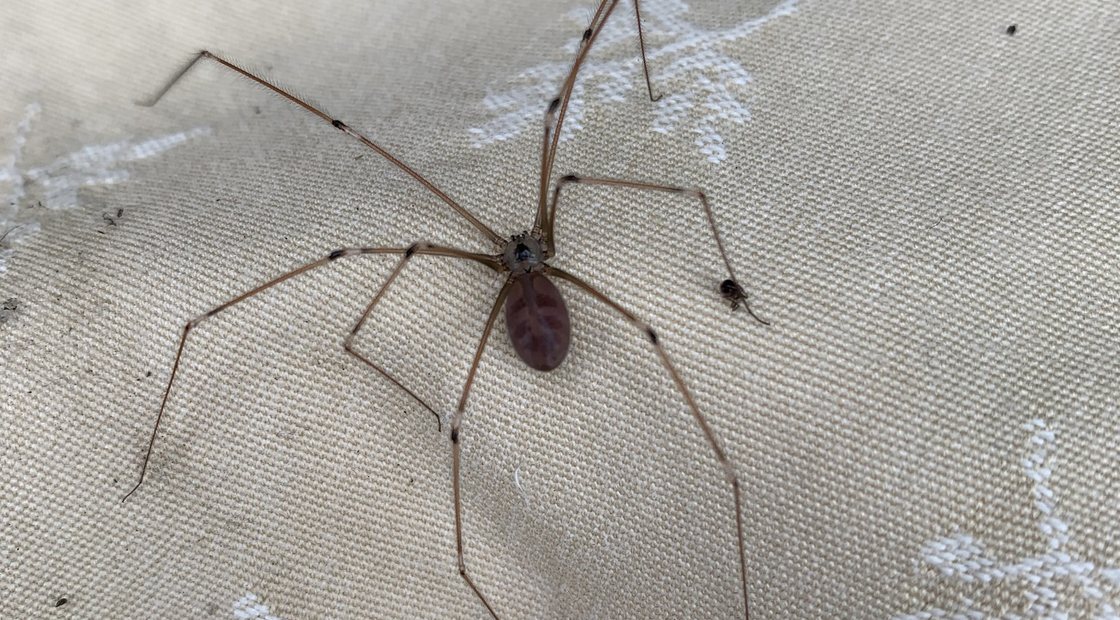
Spider control in East Orange, NJ is mostly about damp, quiet, forgotten spaces, and this city has a lot of them. Century-old stone and block basements come with cellar spiders strung across every joist bay, funnel weavers in the corners and window wells, and sac spiders behind stored boxes. Garages, storage rooms, porch eaves, and the narrow shaded gap between attached buildings round it out. Medically significant spiders are uncommon here: the northern black widow occurs in New Jersey but stays in undisturbed outdoor debris, and the brown recluse is not established in the state despite what people assume, though an occasional individual arrives in shipped goods. The practical work is the same regardless. Spiders follow their food, so a building with a lot of webs has a lot of insects, and that is the part worth fixing.
What actually lives in an East Orange basement
Cellar spiders, the long-legged ones with loose, messy webs, dominate damp basements and crawl spaces. Funnel weavers take corners, window wells, and foundation edges. Sac spiders wander at night and account for most of the small bites people worry about. Wolf spiders come in from outside and build no web at all.
Outdoors, orb weavers appear on porches, eaves, and around light fixtures in late summer, where insects at the porch light give them an easy living.
The bites people worry about
Northern black widows exist in New Jersey but are uncommon and stay in undisturbed outdoor spots: woodpiles, stacked stone, debris, the underside of a stoop. Brown recluse are not established in New Jersey; verified reports are almost always misidentified spiders, though one occasionally travels in with freight.
Any spider bite that develops significant pain, spreading redness, or systemic symptoms warrants a doctor. Correct identification matters more than assumption.
How treatment works
The exterminator starts with a physical de-webbing of the basement, corners, eaves, window wells, and garage, removing egg sacs as well, because removing the egg sacs is what stops the cycle from restarting. Then the harborage gets treated: joist bays, wall voids, the sill and rim joist, window wells, and stored-material zones, with a residual perimeter where they cross.
The lasting part is habitat. Dehumidify and dry the basement, cut clutter and cardboard, seal the sill plate and utility gaps, fix door sweeps and window screens, and switch porch and stoop lights to warm or yellow bulbs so fewer insects gather. Cut the prey and the spiders leave with it.
Call and connect with an experienced local exterminator.