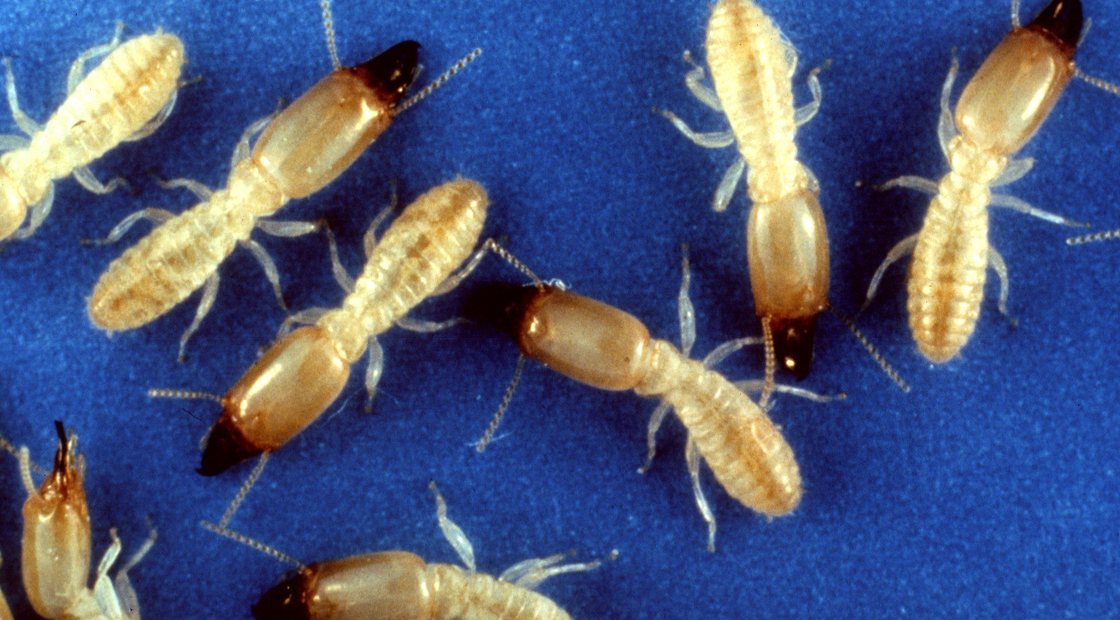
Termite control in East Orange, NJ matters because New Jersey sits squarely in the eastern subterranean termite's range, and East Orange's housing stock is exactly what they want: wood-framed homes built in the early 1900s, with stone and block foundations, damp basements, and a century of settling. Subterranean termites nest in the soil and must stay in contact with it or with a moisture source. They forage upward, entering through cracks in a foundation wall or slab, gaps around plumbing penetrations, and directly through mortar joints that have degraded, or they build pencil-width mud tubes up the exposed foundation face when they cannot find a crack. Most homeowners never see the problem until they find those tubes, a spring swarm, or wood that gives way. Damage is slow and it compounds. Call and a local pro can inspect and treat the colony.
Why East Orange homes are vulnerable
A prewar frame house on an old stone or block foundation has more entry points than a modern slab. Mortar degrades. The sill plate sits low. Basements run damp, and a damp basement is a termite invitation. Add a downspout that discharges against the wall, mulch piled over the foundation, a porch post standing on soil, or firewood against the building, and the colony has both moisture and a route.
In a spring swarm you may see dark winged termites near a basement window. That is a colony already established, not one arriving. People frequently mistake them for flying ants: termites have a straight body, straight antennae, and four wings of equal length, while ants have a pinched waist, bent antennae, and front wings longer than the back.
What treatment looks like
A local exterminator inspects first, checking the foundation perimeter, sill plate, basement walls, plumbing penetrations, crawl spaces, and any wood near soil for mud tubes, damaged wood, discarded wings, or a swarm. Once subterranean termites are confirmed, the standard fix is a liquid termiticide soil barrier: trenching and treating the soil around the foundation, and drilling and treating through concrete where a slab, patio, porch, or sidewalk abuts the building, so termites meet a continuous treated zone. In-ground bait stations are used where trenching is impractical, which in a dense city with tight lot lines is often.
The pro also flags the conditions feeding it: downspouts discharging at the wall, mulch over the foundation, wood-to-soil contact, poor grading, and basement moisture. A treated barrier in dry, well-drained soil lasts much longer than one sitting in a damp trench.
Signs worth a call
Mud tubes on the foundation wall, the basement wall, or a support post. A spring swarm of dark winged termites, usually on a warm day after rain. Discarded wings on a windowsill or in a spiderweb. Wood trim, baseboards, joists, or a door frame that sounds hollow, blisters, or gives way under a screwdriver. Floors that sag.
Any one of those means a colony that has been working quietly for a while. Termites do not announce themselves, and in a shared or attached building the inspection is worth extending next door.
Call and connect with an experienced local exterminator.